

NeuroQuiet Review 2026: An Independent, Evidence-Based Look
NeuroQuiet review 2026: label checked ingredient by ingredient, doses vs research, side effects, interactions, complaints, refunds and where to buy safely.

Last updated: October 2026 · Independent review · No testimonials, no paid placement
Looking for an honest NeuroQuiet review? Most pages ranking for this product repeat the sales page. This one does not. We checked the label, every named ingredient, the doses, the interactions, the guarantee and the buying risks against independent sources, mainly the U.S. National Institutes of Health, and we tell you plainly where the evidence is thin. We did not personally test the product, and we do not publish invented testimonials.
The short answer
NeuroQuiet has no published clinical trial of the finished product. Its ingredients range from modestly studied to unsupported for this use. It may help some people a little and others not at all. If you try it, check your medicines first and use the guarantee (a money-back guarantee (confirm the window on the official site)) as your safety net.
Key takeaways
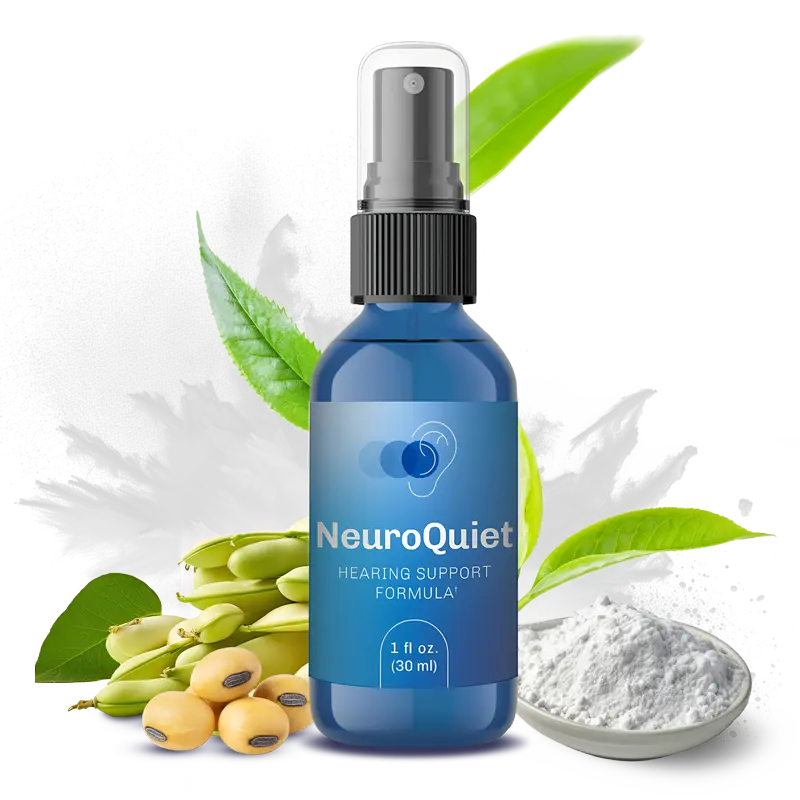
- NeuroQuiet comes as supplement taken with a meal (some sources describe an under-the-tongue liquid) and is marketed as a product that calms the brain's hearing circuits to reduce ringing.
- No published clinical trial has tested the finished product; evidence comes only from individual ingredients.
- Label transparency: doses hidden in a proprietary blend.
- Main safety point: Women who are pregnant, could become pregnant or are breastfeeding, because Mucuna pruriens should be avoided or has not been shown to be safe.
- Guarantee: a money-back guarantee (confirm the window on the official site); buy only from the official website to keep it.
- Evidence-based care for tinnitus and hearing should come first; treat any product as an optional extra.
Complete guide: Tinnitus supplements 2026: what really works, and every product compared
Contents
- At a glance
- What it is
- Claims vs. what we verified
- Label Check table
- Ingredients, one by one
- Does it work?
- The research in detail
- Understanding tinnitus and hearing
- How a professional assesses it
- Practical self-care
- Is it right for you?
- Side effects and interactions
- Complaints
- Is it legit or a scam?
- How to trial it fairly
- Price, guarantee and refunds
- Where to buy safely
- Canada, UK and Australia
- Compared with similar products
- Evidence-based alternatives
- Pros, cons and verdict
- FAQ
NeuroQuiet at a glance
- Format: supplement taken with a meal (some sources describe an under-the-tongue liquid)
- How it is used: as directed on the label
- Main claim: calms the brain's hearing circuits to reduce ringing
- Label transparency: proprietary blend, doses hidden
- Guarantee: a money-back guarantee (confirm the window on the official site)
- Seller: sold through the official website
- Pricing: single and multi-bottle options
- Our evidence rating: Limited; finished product untested
What is NeuroQuiet?
NeuroQuiet comes as supplement taken with a meal (some sources describe an under-the-tongue liquid), marketed as a product that calms the brain's hearing circuits to reduce ringing. The recommended use is as directed on the label. It is sold by sold through the official website. Named ingredients: Alpha-GPC, GABA, Mucuna pruriens (L-dopa bean), Shilajit, L-arginine, L-tyrosine.
Like most products in this category, it is sold direct to consumers online, promoted through long sales pages and affiliate reviews, and backed by a money-back guarantee rather than by published clinical trials. That does not make it a scam, but it does mean the burden of proof sits with the claims, and that is what we checked.
How NeuroQuiet is marketed, and what we could verify
The claim: it calms the brain's hearing circuits to reduce ringing.
What we found: The idea that tinnitus involves overactive brain pathways is correct, but none of these ingredients has been shown to calm them. Mucuna contains L-dopa, the same compound used as a Parkinson's drug, which makes this formula more drug-like than most.
Important: People taking Parkinson's medicines, MAO inhibitors, antipsychotics or blood-pressure medicines should not use it without medical advice.
NeuroQuiet Label Check: label vs. research
This table is our own analysis. For each named ingredient it compares what the label discloses with the amounts typically used in published studies, and grades the evidence for the purpose it is marketed for. It is the quickest way to see whether a formula is likely to deliver research-level doses.
| Ingredient | On the label | Typical amount in studies | Evidence for this use |
|---|---|---|---|
| Alpha-GPC | Not disclosed | 400 to 1,200 mg a day | Limited |
| GABA | Not disclosed | No established dose | Insufficient |
| Mucuna pruriens (L-dopa bean) | Not disclosed | No established dose | Insufficient |
| Shilajit | Not disclosed | No established dose | Insufficient |
| L-arginine | Not disclosed | 3 to 9 g a day | Limited for blood pressure |
| L-tyrosine | Not disclosed | single doses of about 2 g before acute stress | Limited |
Typical study amounts are approximate ranges from published research summarised by NIH sources; they are not dosing advice.
NeuroQuiet ingredients, one by one
Research on single ingredients is not proof that a finished product works, but it shows what is plausible and what is not.
Alpha-GPC
What it is: A choline compound marketed for brain health. What the research shows: Small studies in cognition; no good evidence for tinnitus. A large observational study linked long-term use with a higher stroke risk, which does not prove cause but deserves caution.
Safety: Headache, heartburn, dizziness.
GABA
What it is: The brain's main calming neurotransmitter, taken here as a supplement. What the research shows: Oral GABA is thought to cross poorly into the brain, and human studies on sleep, stress or tinnitus are small and inconclusive.
Safety: Generally well tolerated; may cause drowsiness.
Mucuna pruriens (L-dopa bean)
What it is: A bean that naturally contains L-dopa, the same compound used as a Parkinson's drug. What the research shows: Studied in Parkinson's disease because of its L-dopa content; no good evidence for tinnitus.
Safety: Can cause nausea, low blood pressure and involuntary movements; interacts with Parkinson's medicines, MAO inhibitors and antipsychotics.
Shilajit
What it is: A mineral-rich resin from mountain rocks. What the research shows: Human evidence for any benefit is very limited.
Safety: Unpurified products can contain heavy metals; buy only tested products.
L-arginine
What it is: An amino acid the body uses to make nitric oxide. What the research shows: Can modestly lower blood pressure; no good evidence for tinnitus or prostate benefits.
Safety: May add to blood-pressure medicines; NIH notes it should not be used after a heart attack.
L-tyrosine
What it is: An amino acid used to make dopamine and thyroid hormone. What the research shows: Small studies suggest it may help mental performance under acute stress.
Safety: May interact with thyroid medicine and MAO inhibitors.
Dose transparency
NeuroQuiet lists its ingredients inside a proprietary blend without individual doses. A blend can be legal and common, but it means nobody, including us, can check whether each ingredient is present at an amount that has been studied. When doses are hidden, treat specific benefits as the manufacturer's claims.
Proprietary blends, explained
A proprietary blend lists several ingredients under one total weight, from most to least, without saying how much of each is present. It is legal in the United States, but it prevents buyers from checking doses against research. Very long ingredient lists in a single capsule, dropper or scoop usually mean small amounts of each, because the total weight is limited.
Does NeuroQuiet work?
There is no published clinical trial of the finished product. Clinical guidelines from ear, nose and throat specialists recommend against dietary supplements for persistent tinnitus, because good-quality trials have not shown a benefit. Ginkgo, the most studied herb, did not outperform placebo in systematic reviews. Hearing-support formulas are therefore best seen as an optional extra, never a treatment.
The evidence in one line per ingredient
- Alpha-GPC: Limited.
- GABA: Insufficient evidence.
- Mucuna pruriens (L-dopa bean): Insufficient evidence.
- Shilajit: Insufficient evidence.
- L-arginine: Limited for blood pressure.
- L-tyrosine: Limited.
What realistic results look like
For products in this category, the honest expectation is no change for many users and a modest change for some. Dramatic results promised in a few days or weeks are not supported by evidence. If symptoms are significant, evidence-based care will usually do far more than any supplement.
The research on tinnitus and hearing products, in detail
In 2014 the American Academy of Otolaryngology–Head and Neck Surgery published a clinical practice guideline on tinnitus. After reviewing the evidence, it recommended against using ginkgo biloba, melatonin, zinc or other dietary supplements to treat persistent, bothersome tinnitus, because studies did not show a consistent benefit and supplements carry costs and possible side effects. The same guideline recommended a hearing evaluation, education and counselling, hearing aids for people with hearing loss, and cognitive behavioural therapy.
A Cochrane systematic review of ginkgo for tinnitus found no evidence that it was effective for people whose main complaint was tinnitus. A separate Cochrane review of zinc found no evidence that zinc supplements improved tinnitus in adults. These are the ingredients most often found in hearing formulas, and they are also the ones that have been tested most carefully.
The strongest evidence for reducing the impact of tinnitus is for cognitive behavioural therapy. A Cochrane review found that CBT reduces how much tinnitus affects quality of life, even though it does not change the loudness itself. Hearing aids help many people with hearing loss and tinnitus, partly by making outside sounds easier to hear so the tinnitus becomes less noticeable.
Hearing loss itself deserves attention for another reason: the Lancet Commission on dementia prevention identifies untreated hearing loss in midlife as one of the largest modifiable risk factors for dementia, and a large trial in older adults at higher risk found that hearing intervention slowed cognitive decline over three years. Getting a hearing test is therefore one of the most valuable steps anyone with ringing ears can take.
The practical message is that a hearing supplement, if used at all, should come after a hearing test and alongside proven approaches, never instead of them.
Understanding tinnitus and hearing: the bigger picture
Tinnitus is the perception of sound, such as ringing, buzzing or hissing, without an outside source. It affects a large share of adults at some point and becomes more common with age and noise exposure. In most people it is linked to some degree of hearing loss: when the inner ear sends less sound information to the brain, the brain's hearing pathways can become overactive and generate a sound of their own. That is why tinnitus is often described as a brain response rather than a problem inside the ear canal. Other contributors include earwax build-up, ear infections, certain medicines, jaw and neck problems, and, rarely, blood-vessel or nerve conditions. Stress, poor sleep and anxiety do not usually cause tinnitus, but they make it feel louder and harder to ignore.
What helps regardless of supplements
- A hearing test with an audiologist to check for hearing loss.
- Hearing aids when hearing loss is present; many include tinnitus sound programs.
- Sound therapy and background sound, especially at night.
- Cognitive behavioural therapy, which has the best evidence for reducing tinnitus distress.
- Protecting your ears from loud noise to prevent further damage.
Warning signs that need a doctor
Tinnitus in one ear only, pulsing in time with your heartbeat, sudden hearing loss, vertigo, or ringing after a head injury needs prompt medical assessment; sudden hearing loss should be seen within days.
How a professional assesses tinnitus and hearing
An assessment for tinnitus usually starts with an ear examination to look for wax, infection or eardrum problems, followed by a hearing test (audiogram) with an audiologist. Depending on the findings, a doctor may check blood pressure, review medicines that can cause ringing (such as high-dose aspirin, some antibiotics and chemotherapy drugs), and order imaging if the tinnitus is one-sided, pulsing or accompanied by sudden hearing change. Questionnaires that rate how much tinnitus disrupts sleep, concentration and mood help guide treatment and measure progress.
Myths and facts about tinnitus and hearing
Myth: Tinnitus means you are going deaf.
Fact: Tinnitus is often linked to some hearing loss, but it does not mean you will lose your hearing completely, and many people with tinnitus keep functional hearing for life.
Myth: Nothing can be done about tinnitus.
Fact: There is no pill that switches it off, but hearing aids, sound therapy and cognitive behavioural therapy reduce how loud and distressing it feels for many people.
Myth: A supplement can repair the inner ear.
Fact: Damaged hair cells in the human inner ear do not regrow, and no supplement has been shown to repair them.
Myth: Silence helps tinnitus.
Fact: Complete silence usually makes tinnitus more noticeable; gentle background sound tends to help.
NeuroQuiet medication interaction checker
Based on the named ingredients, these medicine groups deserve a check with your doctor or pharmacist before you start NeuroQuiet:
| If you take | Relevant ingredient in NeuroQuiet | What to do |
|---|---|---|
| Blood-pressure and heart medicines (including digoxin and diuretics) | L-arginine | Check blood pressure; ask your doctor |
| Thyroid medicine (levothyroxine) | L-tyrosine | Tell your doctor; biotin can distort thyroid tests |
| Parkinson's, dementia, antipsychotic or MAO inhibitor medicines | Alpha-GPC, Mucuna pruriens (L-dopa bean) | Do not combine without medical advice |
Questions to ask your doctor or pharmacist about NeuroQuiet
- Could any of my symptoms have a cause that needs testing first?
- Do any of these ingredients interact with my medicines: Alpha-GPC, GABA, Mucuna pruriens (L-dopa bean), Shilajit, L-arginine, L-tyrosine?
- Is there an evidence-based treatment I should try first or alongside it?
- What warning signs should make me stop and call you?
- How should I measure whether it is helping?
- Is it safe with my other conditions, such as kidney, liver or heart disease?
What we would want to see from the maker
These are the steps that would move NeuroQuiet from marketing claims towards credible evidence:
- A complete supplement facts panel with the dose of every ingredient.
- A certificate of analysis from an independent laboratory confirming identity, purity and absence of heavy metals.
- At least one published, placebo-controlled trial of the finished product.
- Claims limited to what the evidence supports, without disease-cure language.
- Clear refund terms stating whether the window starts at order or delivery.
Practical self-care for tinnitus and hearing
Whatever you decide about NeuroQuiet, these everyday steps, drawn from clinical guidance and rehabilitation practice, make a real difference:
Living well with tinnitus starts with understanding that the sound is real but not dangerous in itself. Fear and constant monitoring make the brain pay more attention to it, while reassurance and distraction help it fade into the background. Many people notice that tinnitus is loudest in quiet rooms and at night, which is why sound enrichment is one of the simplest tools available.
At night, a fan, a bedside sound generator, soft music or a sound app set to a low volume can make the ringing less noticeable without masking it completely. The goal is a sound slightly quieter than the tinnitus, which helps the brain habituate over time. Keeping a regular sleep routine, avoiding screens late at night and limiting caffeine and alcohol in the evening also reduce the distress many people feel at bedtime.
During the day, protect your ears from loud noise with earplugs or earmuffs at concerts, when using power tools or in noisy workplaces, and keep headphone volume at a moderate level. Avoid using cotton buds in the ear canal, which can push wax deeper. If you notice your hearing is reduced, a hearing test is worthwhile even if you think it is mild, because hearing aids often reduce tinnitus at the same time as improving communication.
Stress management makes a real difference. Relaxation exercises, mindfulness, regular physical activity and talking therapies help reduce the emotional reaction to tinnitus. Tinnitus support groups and reputable charities offer education and practical tips. Keeping a short diary of when tinnitus feels worse, such as after poor sleep, stressful days or loud environments, can reveal patterns you can change.
Finally, check your medicines with a pharmacist: high-dose aspirin, some antibiotics, diuretics and chemotherapy drugs can cause or worsen ringing, and alternatives may be available.
Is NeuroQuiet right for you?
Skip it or ask a doctor first if any of these apply
- Women who are pregnant, could become pregnant or are breastfeeding, because Mucuna pruriens should be avoided or has not been shown to be safe.
- People with high or low blood pressure or on heart medicines, because L-arginine can affect blood pressure or interact with heart drugs.
- People with thyroid disease or on thyroid medicine, because L-tyrosine can affect thyroid levels or thyroid blood tests.
- People with Parkinson's disease, dementia, heart rhythm problems or on psychiatric medicines, because Alpha-GPC and Mucuna pruriens acts on brain chemistry like a drug.
It may be reasonable to consider if
- You have had a medical assessment and no warning signs are present.
- Your doctor or pharmacist has checked it against your medicines.
- You understand results are not guaranteed and are comfortable using the refund if needed.
- You will keep doing the evidence-based steps above at the same time.
NeuroQuiet side effects and interactions
We found no published safety study of the finished product, so possible side effects come from its ingredients:
- Alpha-GPC: Headache, heartburn, dizziness.
- GABA: Generally well tolerated; may cause drowsiness.
- Mucuna pruriens (L-dopa bean): Can cause nausea, low blood pressure and involuntary movements; interacts with Parkinson's medicines, MAO inhibitors and antipsychotics.
- Shilajit: Unpurified products can contain heavy metals; buy only tested products.
- L-arginine: May add to blood-pressure medicines; NIH notes it should not be used after a heart attack.
- L-tyrosine: May interact with thyroid medicine and MAO inhibitors.
How to report a side effect
- United States: the FDA's MedWatch program.
- Canada: the Canada Vigilance Program (MedEffect Canada).
- United Kingdom: the MHRA Yellow Card scheme.
- Australia: the Therapeutic Goods Administration.
- Always tell your doctor or pharmacist as well.
NeuroQuiet complaints
We do not publish customer testimonials, positive or negative, because they cannot be verified. Instead, here is the pattern of complaints that buyers commonly report for direct-to-consumer products in this category:
- Results slower or smaller than the marketing suggests, which is the most common complaint for supplements in every category.
- Higher totals than expected because bundles of 3 or 6 bottles are promoted as the best value.
- Shipping delays and, outside the United States, extra bank currency-conversion fees.
- Difficulty getting refunds when the product was bought from an unauthorised reseller, where the guarantee does not apply.
- Counterfeit or expired product bought on marketplaces.
Most of these can be avoided by buying from the official site, choosing a package that fits the guarantee window, confirming the order is not a subscription, and keeping your order number.
Is NeuroQuiet legit or a scam?
NeuroQuiet is a real product sold through an official checkout with a money-back guarantee (confirm the window on the official site). Being a legitimate business is not the same as being proven to work.
- Seller: sold through the official website.
- Label: proprietary blend, doses hidden.
- Finished-product clinical trial: none published that we could find.
- FDA status: dietary supplements are not FDA-approved; claims of FDA approval are a red flag.
Marketing red flags to watch for
- Promises to cure, reverse or permanently fix a medical condition.
- Very short timelines for dramatic results.
- Claims that doctors or the industry are hiding the truth.
- Badges such as clinically proven without published studies.
- Countdown timers and pressure to buy six bottles now.
How to trial NeuroQuiet fairly
- Before starting, write down a baseline: how often and how strongly you notice the problem NeuroQuiet targets, on a 0 to 10 scale, for one week.
- Check every ingredient against your current medicines with a pharmacist or doctor.
- Use it exactly as directed (as directed on the label) and change nothing else at the same time, so you can tell what made a difference.
- Score your symptoms weekly with the same scale.
- Decide well before the guarantee closes (a money-back guarantee (confirm the window on the official site)) whether there is a clear, meaningful change compared with your baseline.
- Stop immediately and seek advice if you notice side effects or any warning sign listed on this page.
A realistic timeline
- Weeks 1 to 2: watch for side effects; real benefits this early are unlikely.
- Weeks 4 to 6: compare your weekly scores with your baseline.
- Before the guarantee closes: decide honestly whether there is a meaningful change, and request a refund if not.
NeuroQuiet price, guarantee and refunds
Pricing: single and multi-bottle options. Guarantee: a money-back guarantee (confirm the window on the official site). Confirm the current price, shipping and refund terms on the official website, because offers change.
Choosing a package
- Buy enough to complete a fair trial inside the guarantee window, not more.
- Compare the per-unit price with your total upfront cost.
- Check whether shipping is free on larger packages.
- Make sure bonuses do not hide a recurring subscription.
How to request a refund
- Find your order number in the confirmation email; ClickBank orders show it on the receipt.
- Contact the vendor's support or ClickBank customer support and ask for a refund under the guarantee.
- Return the product if the terms require it, using tracked shipping, and keep the tracking number.
- Act well before the deadline: check whether the window counts from the order date or the delivery date.
- If you do not get a response, contact ClickBank support directly with your order number.
Where to buy NeuroQuiet safely
Buy only from the official website or its authorised checkout. NeuroQuiet is not sold through pharmacies or chains, and listings on Amazon, Walmart or eBay are third parties that may be counterfeit, expired or stored badly, usually without the guarantee.
How to spot an unofficial seller
- Websites that copy the official page and redirect to an unofficial checkout.
- Prices far below the official price on marketplaces, which often indicates counterfeit or expired product.
- Unexpected recurring charges: confirm that your order is a one-time purchase.
- Fake reviews and invented testimonials on look-alike sites.
- Claims that NeuroQuiet cures a disease, works for everyone, or replaces your medicine.
How to verify the official checkout
- Start from a trusted link rather than a search ad.
- Check that the checkout names the official retailer.
- Compare the price with the official page.
- Read the refund terms before paying.
- Keep the receipt and order number.
Buying NeuroQuiet in Canada, the UK or Australia
Canada
Health Canada's guidance on personal importation generally allows individuals to bring in health products for personal use, typically up to a 90-day supply, provided the products are not prohibited. Products authorised for sale in Canada carry an eight-digit Natural Product Number (NPN) or DIN-HM on the label; most ClickBank supplements sold from the United States do not have one. You can report a side effect to Health Canada through the Canada Vigilance Program (MedEffect Canada). Before starting, speak with your family doctor, a pharmacist, or your provincial health line (811 in most provinces).
The UK
Food supplements sold in the UK must meet UK food law, and herbal medicines are regulated by the MHRA. Products ordered from the United States are imported goods: depending on the value and the seller's checkout, import VAT, customs duty or a courier handling fee may apply when the parcel arrives, so check your final cost. You can report a suspected side effect to the MHRA through the Yellow Card scheme. Before starting, speak with your GP, a community pharmacist, or NHS 111.
Australia
Under the TGA's personal importation scheme, individuals can generally import up to a three-month supply of an unapproved health product for personal use, provided it does not contain prohibited substances. Products approved for sale in Australia carry an AUST L or AUST R number; most ClickBank supplements shipped from the United States do not. You can report a side effect to the TGA online. Before starting, speak with your GP, a pharmacist, or the healthdirect helpline (1800 022 222).
In all three countries, prices are usually charged in US dollars, so your bank may add a currency-conversion fee, and international delivery takes longer, which matters when the guarantee counts from the order date.
NeuroQuiet compared with similar products
This comparison uses the same criteria for every product we have reviewed in the tinnitus and hearing category, so you can see how NeuroQuiet stacks up on transparency and guarantees.
| Product | Format | Label transparency | Guarantee |
|---|---|---|---|
| NeuroQuiet | supplement taken with a meal (some sources describe an under-the-tongue liquid) | proprietary blend, doses hidden | a money-back guarantee (confirm the window on the official site) |
| EchoXen | ear drops applied into the ear canal | proprietary blend, doses hidden | a money-back guarantee |
| ZenCortex | liquid dropper | proprietary blend, doses hidden | a 60-day money-back guarantee |
| SharpEar | capsules | proprietary blend, doses hidden | a money-back guarantee |
| Audifort | liquid dropper | proprietary blend, doses hidden | a 90-day money-back guarantee |
How to compare any two products
- Is the full label with doses published?
- Do the doses match those used in research?
- Do any ingredients interact with your medicines?
- How long is the guarantee and who processes refunds?
- Does the marketing promise cures or fast results?
Evidence-based alternatives to NeuroQuiet
If your goal is to improve tinnitus and hearing, here is how the main options compare. We place NeuroQuiet and similar products honestly within the full range of choices:
| Option | Strength of evidence | Best for | Notes |
|---|---|---|---|
| Hearing test and audiology review | Strong | Everyone with persistent tinnitus | Identifies hearing loss and rules out other causes |
| Hearing aids | Moderate | People with hearing loss | Often reduce tinnitus awareness while improving communication |
| Cognitive behavioural therapy | Strong for distress | Bothersome tinnitus | Reduces impact on sleep, mood and concentration |
| Sound therapy and sound enrichment | Limited to moderate | Tinnitus that is worse in quiet | Low-cost and low-risk |
| Treating earwax or ear infection | Strong when present | Muffled hearing, blocked feeling | Simple and often quick |
| Dietary supplements | Not recommended by guidelines | Optional only, after assessment | Check interactions; do not delay care |
The practical order is: get assessed, start the options with the strongest evidence, and treat any product, including NeuroQuiet, as an optional extra that must not delay or replace effective care.
Pros, cons and our verdict
Pros
- A money-back guarantee: a money-back guarantee (confirm the window on the official site).
- Some ingredients have been studied, even though the finished product has not.
- Sold directly by the vendor, so you know where the genuine product comes from.
Cons
- Doses are fully or partly hidden in a proprietary blend.
- No published clinical trial of the finished product.
- Online-only purchase, usually priced in US dollars.
Our verdict
NeuroQuiet is a product whose ingredients have, at best, modest or mixed evidence, and whose finished formula has not been tested in a published trial. If you choose to try it, do so with realistic expectations, after checking your medicines, using a written baseline and the guarantee to judge the result honestly.
Check the official NeuroQuiet website & current pricing
How we reviewed NeuroQuiet
This review follows our published method. We read the manufacturer's sales page, label and refund terms as described in available sources, and record the date. For each named ingredient we checked independent sources, starting with the NIH Office of Dietary Supplements, NCCIH and the relevant NIH institutes, and graded the evidence for the purpose the product is marketed for. We flagged interactions and groups who should avoid it, compared it with every other product we have reviewed in the same category, and looked at buying risks. We do not accept payment to change a verdict, and we do not publish testimonials. Read how we review supplements.
Glossary
- Audiogram: a chart from a hearing test showing the quietest sounds you can hear at different pitches.
- Cochlea: the snail-shaped inner-ear organ that turns sound vibrations into nerve signals.
- Hair cells: sensory cells in the cochlea; once lost in humans they do not regrow.
- Habituation: the brain's natural process of paying less attention to a constant sound.
- Pulsatile tinnitus: tinnitus that beats in time with the pulse, which needs medical assessment.
- Ototoxic: describes medicines or substances that can damage the inner ear.
- Sound enrichment: adding low-level background sound to reduce tinnitus contrast.
- Proprietary blend: a group of ingredients listed under one total weight without individual doses.
- Placebo: an inactive look-alike used in trials so that real effects can be separated from expectation.
- Randomised controlled trial (RCT): a study in which people are randomly assigned to the product or a comparison, the strongest test of whether something works.
- Meta-analysis: a study that pools the results of several trials to give a more reliable overall answer.
- FDA-registered facility: a factory that has registered with the U.S. FDA; it does not mean the product is FDA-approved.
- GMP: Good Manufacturing Practice, quality rules for how products are made; they do not prove a product works.
- ClickBank: an established online retailer that processes orders and refunds for many vendors.
- Drug interaction: when a supplement changes how a medicine works, making it weaker, stronger or more toxic.
Frequently Asked Questions
Does NeuroQuiet really work?
There is no published clinical trial of the finished product; its ingredients have modest or mixed evidence at best.
What are the ingredients in NeuroQuiet?
Named ingredients: Alpha-GPC, GABA, Mucuna pruriens (L-dopa bean), Shilajit, L-arginine, L-tyrosine.
Are the doses disclosed?
NeuroQuiet lists its ingredients inside a proprietary blend without individual doses. A blend can be legal and common, but it means nobody, including us, can check whether each ingredient is present at an amount that has been studied. When doses are hidden, treat specific benefits as the manufacturer's claims.
Is NeuroQuiet safe?
It depends on your health and medicines. Women who are pregnant, could become pregnant or are breastfeeding, because Mucuna pruriens should be avoided or has not been shown to be safe.
What are the side effects of NeuroQuiet?
Side effects depend on the ingredients; see the side effects section above for each one.
Can I take NeuroQuiet with my medicines?
Ask your doctor or pharmacist first; several plant ingredients interact with common medicines.
How long does NeuroQuiet take to work?
Judge it against a written baseline over the period the maker recommends, and decide before the guarantee closes.
Is NeuroQuiet a scam?
It is a real product with an official checkout and a guarantee; the concern is that its claims go further than the evidence.
Is NeuroQuiet FDA approved?
No dietary supplement is FDA-approved. At most, it may be made in an FDA-registered facility, which is different.
Where can I buy NeuroQuiet?
Only from the official website or its authorised checkout, to get the genuine product and the guarantee.
Is NeuroQuiet on Amazon or Walmart?
Listings there are third-party sellers and may be counterfeit; they usually do not carry the official guarantee.
Does NeuroQuiet ship to Canada, the UK and Australia?
Many ClickBank vendors ship internationally; confirm at checkout and check your country's import rules above.
What is the refund policy?
A money-back guarantee (confirm the window on the official site). Contact the vendor or ClickBank support with your order number.
Can NeuroQuiet replace my treatment?
No. Never stop or reduce prescribed treatment because of a supplement or program.
Who should not use NeuroQuiet?
Women who are pregnant, could become pregnant or are breastfeeding, because Mucuna pruriens should be avoided or has not been shown to be safe. People with high or low blood pressure or on heart medicines, because L-arginine can affect blood pressure or interact with heart drugs.
Is there a better alternative?
The evidence-based steps in the alternatives section have stronger support than any product in this category.
Can tinnitus go away on its own?
Yes, tinnitus that starts after a loud noise or an ear infection often fades over days to weeks. Persistent tinnitus usually becomes less bothersome over time as the brain habituates, especially with sound therapy and support.
Is tinnitus a sign of a serious disease?
Usually not. Most tinnitus is linked to hearing loss or noise exposure. One-sided, pulsing or sudden tinnitus, or tinnitus with hearing loss or vertigo, should be assessed promptly.
Does caffeine make tinnitus worse?
Studies have not shown a consistent effect. Some people notice a change, so it is reasonable to observe your own pattern rather than cutting caffeine out completely.
Can stress cause tinnitus?
Stress rarely causes tinnitus on its own, but it often makes it louder and harder to ignore. Managing stress is part of effective tinnitus care.
Do hearing aids help tinnitus?
For many people with hearing loss, yes. Amplifying outside sounds makes tinnitus less noticeable, and many hearing aids include sound generators.
Who treats tinnitus?
Audiologists, ear, nose and throat doctors and psychologists trained in CBT for tinnitus all play a role.
Affiliate disclosure: this page contains affiliate links; we may earn a commission at no extra cost to you, and this never changes our verdict. Health disclaimer: information only, not medical advice. Statements about supplements have not been evaluated by the FDA; no product is intended to diagnose, treat, cure or prevent any disease. Consult your doctor or pharmacist before using supplements or starting an exercise program.
More NeuroQuiet research
- Where to buy NeuroQuiet in Canada
- Where to buy NeuroQuiet in the UK
- Where to buy NeuroQuiet in Australia
- Where to buy NeuroQuiet
- NeuroQuiet complaints & side effects
Sources & further reading
- Tinnitus: causes and treatment (NIH / NIDCD)
- Age-related hearing loss (NIH / NIDCD)
- How safe is this product or practice? (NIH / NCCIH)
- Dietary supplements (U.S. FDA)
- Dietary supplement fact sheets (NIH Office of Dietary Supplements)
- NeuroQuiet review (Virtual Summit)
Last reviewed: October 2026. Product details are taken from the manufacturer's promotional materials and published label information available at the time of review; always confirm the current label, price and refund terms on the official website. Read how we review, our editorial policy and affiliate disclosure.